



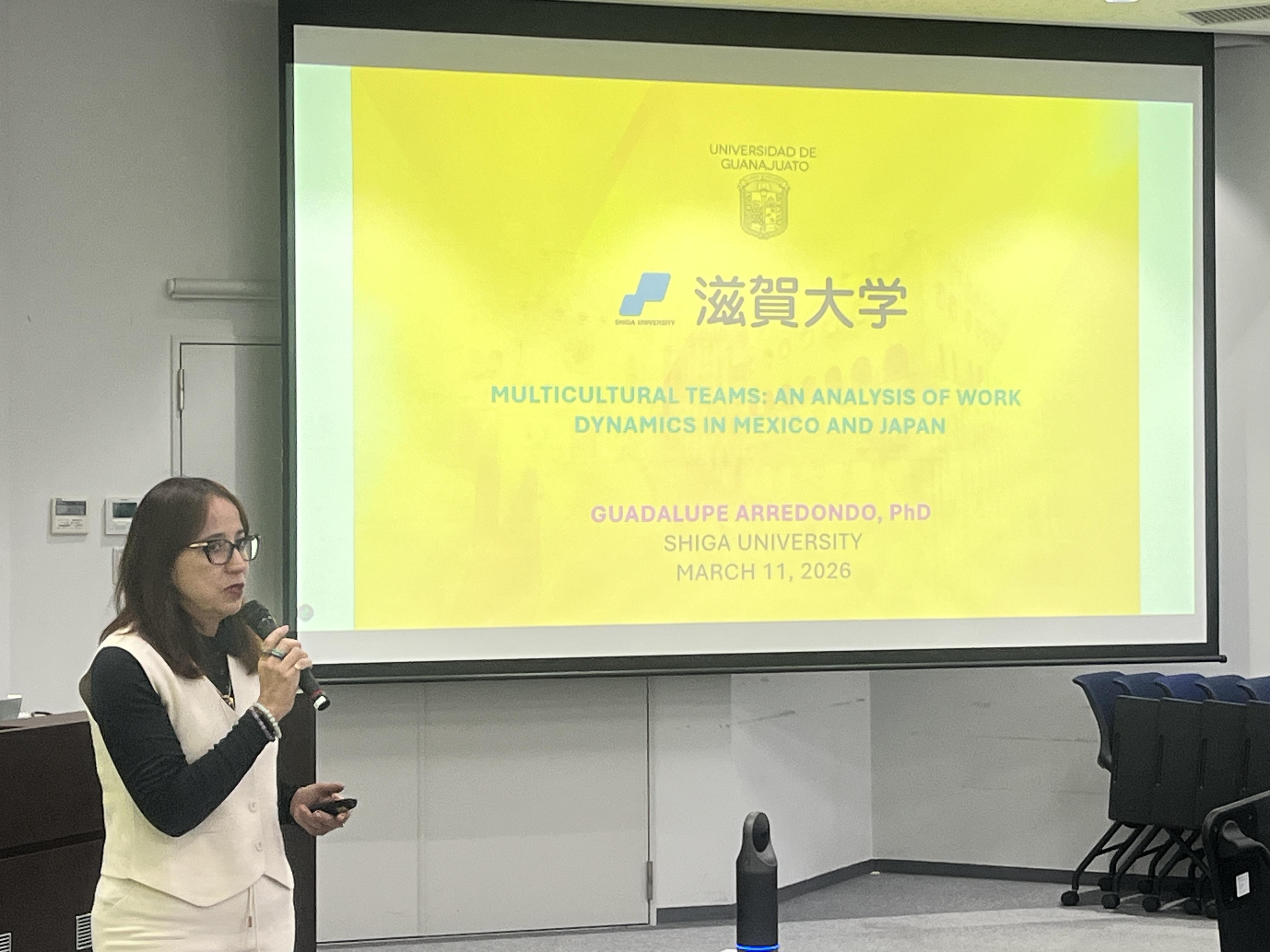
・開催日時:令和8年3月11日(水)13:00-15:00
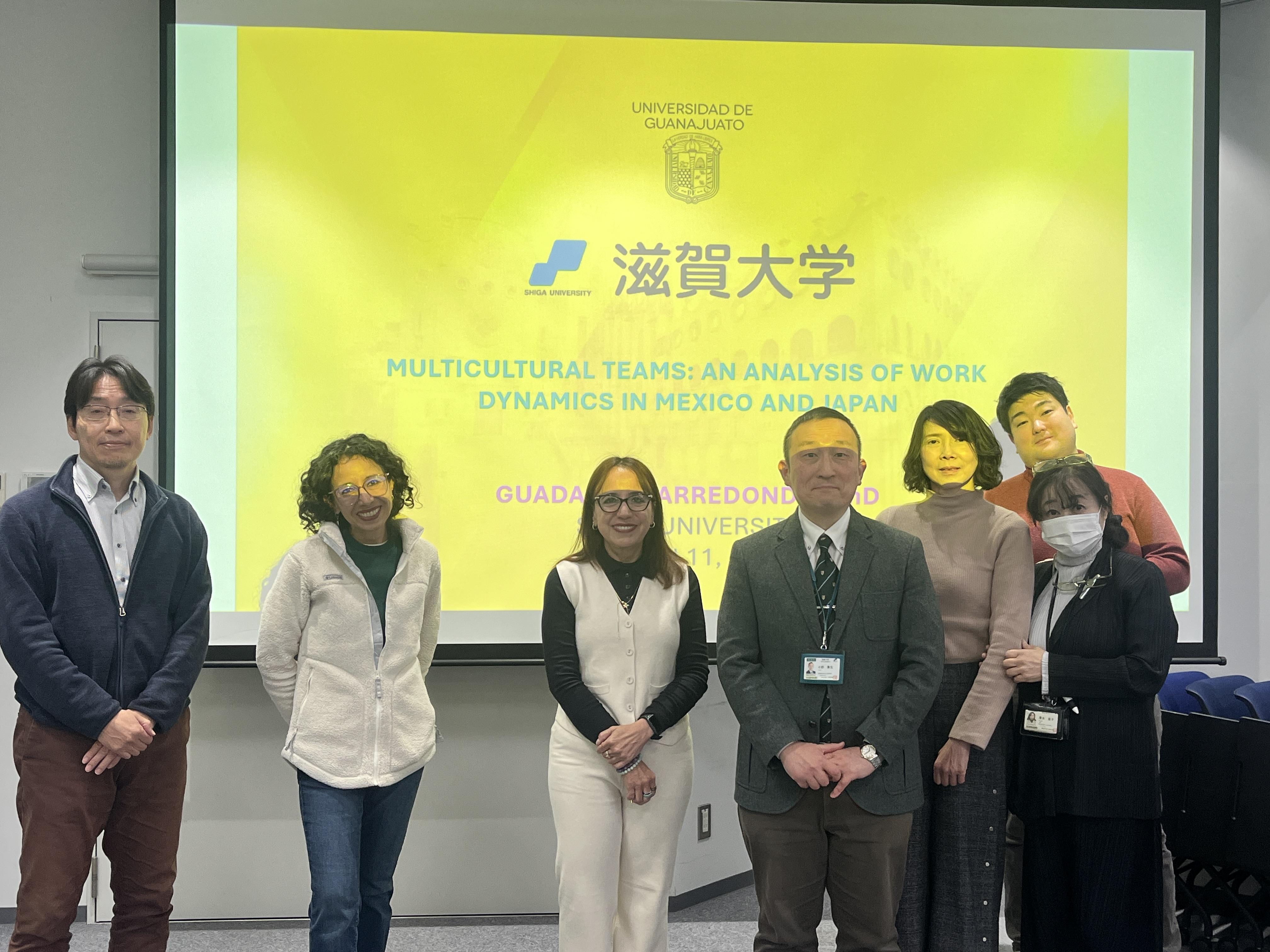
・表題:「Multicultural Teams: An Analysis of Work Dynamics in Mexico and Japan」
・講演者:María Guadalupe Arredondo Hidalgo(Research Professor in the Department of Business Management at the Guanajuato Campus of the University of Guanajuato)
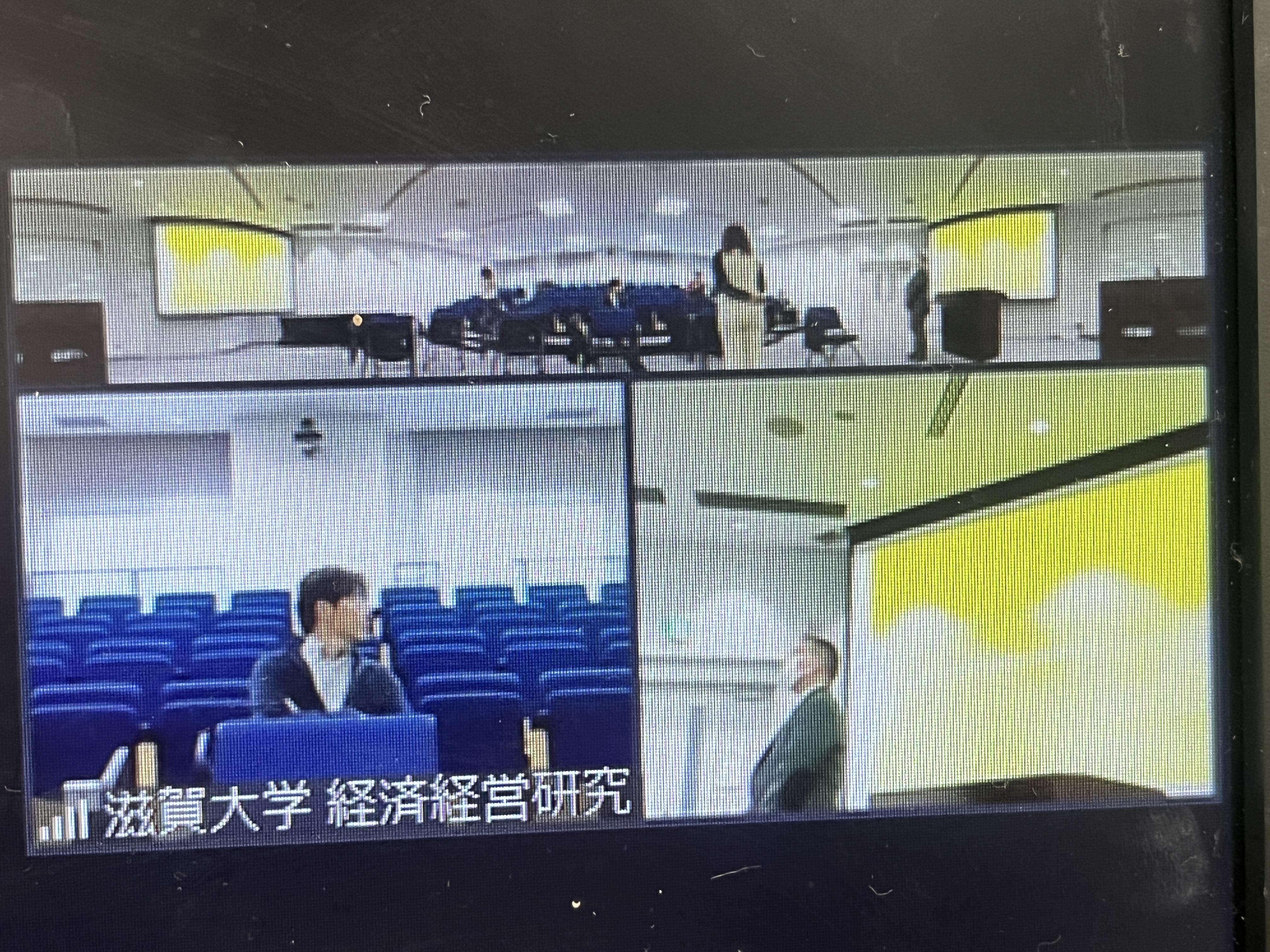
・開催様式:オンライン開催
・講演言語:英語
・参加対象:学内限定(教職員・院生・学部生)
・司会:小野善生 先生(滋賀大学経済学部教授)
開催報告
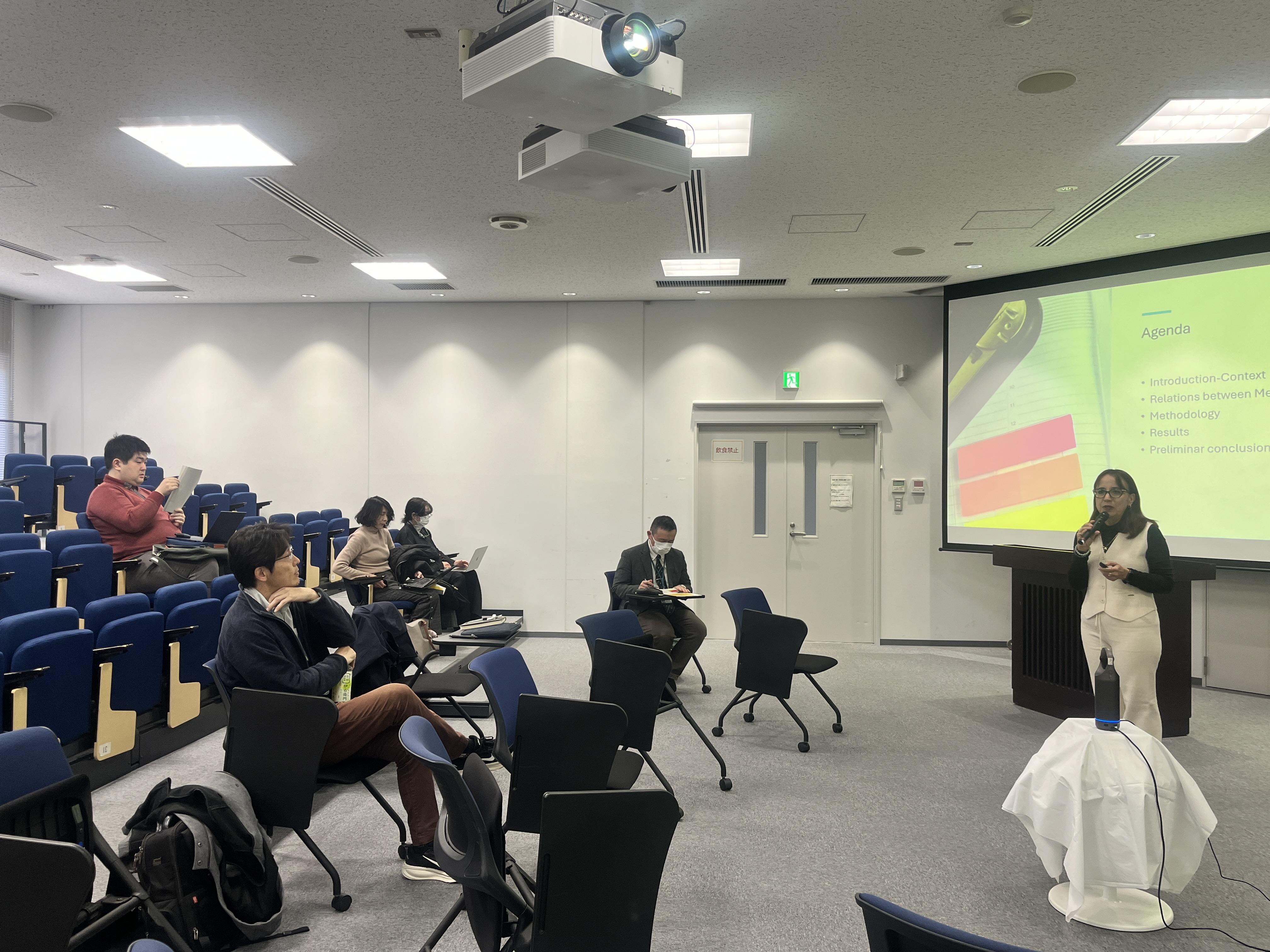
グアナファト大学アルレドンド教授よりMulticultural Teams: An Analysis of Work Dynamics in Mexico and Japanという演題で約1時間程度の講演があり、その後、質疑応答を行った。
講演の内容としては、イントロダクションとしてメキシコと日本の外交上の開始から現在に至るまでの主として経済上の歴史的交流の概要から始まり、現在における日本企業のメキシコに対する投資について報告がなされた。
本論としては、アルレドンド教授が現在調査中の企業組織におけるメキシコ人社員と日本人社員のコミュニケーション・スタイルの違いに関する研究について発表された。本研究の理論的な背景にあるのは、 Clotaire Rapaille (2006)のThe Culture Code: An Ingenious Way to Understand Why People Around the World Live and Buy as They Do のフレームワークである。Rapailleによるメキシコにおける仕事に関する文化コードの特徴としては、仕事は、家族と再会するための手段、あるいは家族を支えるための犠牲として捉えられる。そのため、定時になったらすぐに家族のもとへ帰る、あるいは職場の同僚を「家族」のように扱う傾向が非常に強いと分析されている。その他の特徴としては、「今、この瞬間の感情や繋がり」を最優先する傾向にあるとされる。一方、日本の仕事に関する文化コードの特徴は、日本における仕事は単なる稼ぎの手段ではなく、「自分が社会の中でどの位置にいるか」を確認するためのアイデンティティそのものである。日本人が職場で長時間過ごすのは、それが「家庭(プライベート)」よりも「公的な自己」を確立する場所だからだと分析されいる。また、日本は資源が乏しく、災害が多い島国です。そのため、「ミスをしない」「完璧に整える」ことが、集団が生き残るための絶対条件とされると考えられている。
調査の結果から導き出されたこととして、メキシコ人と日本人のコミュニケーション方法の違いが指摘された。メキシコ人は、コミュニケーションの内容が抽象的で話の内容が本論から逸脱することも度々ある。それに対して日本人の特徴は、意図されていることと表現されていることが異なり、メキシコ人にとっては謎めいたもので距離があると感じられている。
メキシコ人と日本人のコミュニケーション上の最も問題となるのは、日本人がいわゆる「空気を読む」という周囲の空気に応じてコミュニケーションを取ることに対して、メキシコ人は理解できず、話の腰を折るようなコミュニケーションを取ってしまい、うまく連携が取れないという実態が明らかになった。
(文責:経済学部教授 小野善生)
本ページに関するお問い合わせは
滋賀大学経済経営研究所
TEL : 0749-27-1047 / FAX : 0749-27-1397
E-mail: ebr(at)biwako.shiga-u.ac.jp ※(at)を@に変更して送信してください